


Artificial Gravity
Paperback · Springer Nature
 Cheaper in another edition — £154.00 at Springer Nature Link Shop
Artificial Gravity · See that edition →
Tip: open this page in your browser (··· menu → Open in browser) so the shop remembers you came from buono.
William H. Paloski, Ph. D. Human Adaptation and Countermeasures Office NASA Johnson Space Center Artificial gravity is an old concept, having gotten its start in the late in the 19th century when Konstantin Tsiolkovsky, considered by many to be the father of the Russian space program, realized that the human body might not respond well to the free fall of orbital space flight. To solve this problem, he proposed that space stations be rotated to create centripetal accelerations that might provide inertial loading similar to terrestrial gravitational loading. Einstein later showed in his equivalence principle that acceleration is indeed indistinguishable from gravity. Subsequently, other individuals of note, including scientists like Werner von Braun as well as artists like Arthur C. Clarke and Stanley Kubrick, devised elaborate solutions for spinning vehicles to provide “artificial gravity” that would offset the untoward physiological consequences of spaceflight. By 1959, concerns about the then-unknown human responses to spaceflight drove NASA to consider the necessity of incorporating artificial gravity in its earliest human space vehicles. Of course, owing in part to the…
The cheapest new copy of Artificial Gravity is £193.00 at Springer Nature Link Shop; the cheapest used copy is €214.64 at medimops DE.
Other editions

More by Gilles Clément
 Environ(ne)ment : manières d'agir pour demain. Environ(ne)ment : approaches for tomorrow
€4.79
 La alternativa ambiente
€9.40
 Où en est l'herbe ? : réflexions sur le jardin planétaire
€4.65
 El perejil gigante
€20.42
 Une brève histoire du jardin
€12.52
 Manifiesto del Tercer paisaje
€9.50
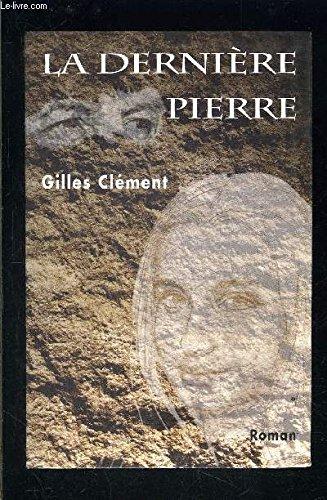 La dernière pierre
€10.00
 L'alternative ambiante
€7.85

buono · Browse the lists · Guides · Blog
Cheap books UK · Libri usati economici (Italia) · Livres pas chers (France) · Gebrauchte Bücher günstig (Deutschland) · Cheap books Europe
Some links here are affiliate links: if you buy, buono may earn a commission. It never changes the price you pay.